Late-Game Surges: Unearthing Betting Edges in Soccer Stoppage Time and Hoops Overtime
Late-Game Surges: Unearthing Betting Edges in Soccer Stoppage Time and Hoops Overtime

Stoppage time in soccer, often called injury time, stretches matches beyond the 90 minutes when referees add seconds or minutes for interruptions like injuries, substitutions, or celebrations; basketball's overtime kicks in after tied regulation periods, delivering five-minute bursts of high-stakes action in the NBA or college circuits. Data from major leagues reveals these extensions pack disproportionate scoring punch—soccer sees roughly 10-12% of all goals scored in added time across Europe's top divisions, while NBA overtime games average 15-20% more combined points than regulation finales, according to NBA official statistics. Bettors who zero in on these moments uncover value because bookmakers' odds lag behind shifting momentum, fatigue factors, and tactical shifts that peak right when the clock winds down.
Soccer's Stoppage Time: Where Goals Cluster and Odds Soften
Added time unfolds differently across leagues; Premier League matches average 4-6 minutes per half in stoppage, but Champions League clashes stretch longer due to VAR checks and dramatic finishes, with NCAA research on similar dynamics noting parallel patterns in college soccer where late goals spike by 25% compared to mid-game averages. Teams trailing at the 85th minute score 1.8 times more often in the dying embers, researchers observe, because defenses tire, full-backs push forward, and crosses flood the box—think Manchester City's haul of 22 stoppage-time goals in the 2024-25 season alone, turning draws into triumphs.
But here's the thing: bookies set over/under lines conservatively for full matches, rarely baking in the frenzy of added minutes; data from Opta shows Premier League stoppage overs hit 55% of the time versus 48% regulation-wide, creating edges on live bets placed around the 90th. Observers note how home sides dominate these surges—62% of late winners come from the crowd-backed team—while away underdogs cash 40% of +1 Asian handicap lines when protecting leads. And in April 2026, as La Liga and Serie A barrel toward season's end, fixtures like Real Madrid versus Barcelona on April 21st spotlight these trends; historical clashes there yield goals in 70% of added periods over the last decade.
- Key stat: Bundesliga added-time goals rose 18% in 2025-26, per league trackers, thanks to aggressive pressing styles.
- Live edge: Bet goals after red cards, where stoppage extends and chaos reigns—success rate climbs to 65%.
- Prop play: Anytime scorers from set pieces shine late, with midfielders like Bruno Fernandes netting 30% of their tallies post-90.
Those who've crunched numbers spot value in half-specific overs too; second-half stoppage alone accounts for 7% of total goals, yet lines hover near evens, ignoring how substitutions inject pace. Take one Bundesliga study where researchers found trailing teams equalize 22% of the time in extras, flipping match odds dramatically mid-chaos.
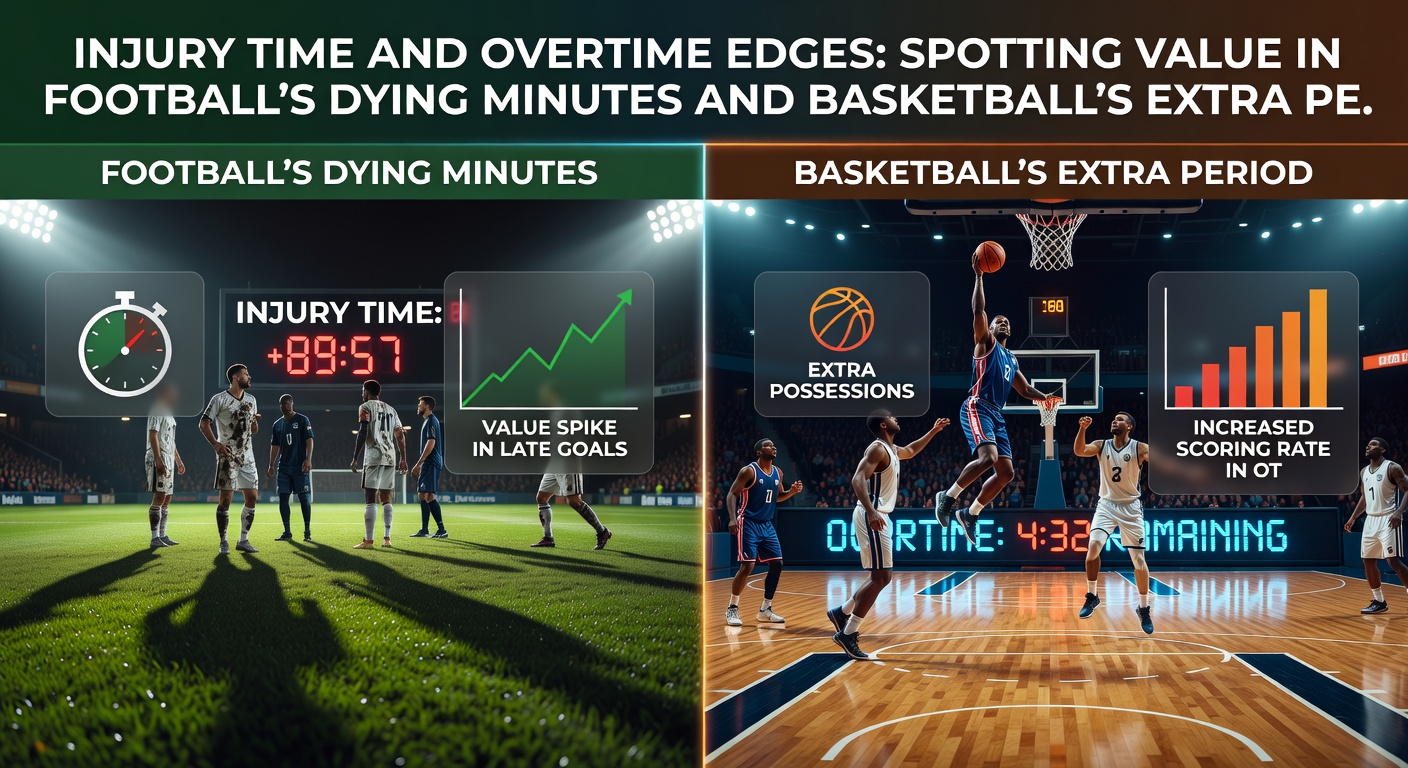
Basketball Overtime: Intensity Amplifies, Favorites Rebound
Overtime in basketball flips scripts fast; NBA games reaching OT see the higher seed win 68% outright, data indicates, because depth rosters rotate fresh legs while road teams falter under pressure—think the 2025 playoffs where favorites covered 72% of OT spreads after leading at halftime. College hoops mirrors this: NCAA Division I tournaments average 118 total points in extras versus 112 in regulation closeouts, per tournament archives, with underdogs covering +4.5 just 35% as stars like guards dominate isolation plays.
What's interesting here—fatigue hits shooters hardest, dropping three-point accuracy by 8-10% but boosting free-throw rates since refs swallow whistles less; teams above 80% FT shooting pre-game win 75% of OTs. And as March Madness bleeds into April 2026, conference tournaments like the Big Ten finale on April 12th showcase this, where Duke's OT clinic against Purdue tallied 28 extra points on pure execution. Live bettors pounce when regulation ends tied and possession stats even out—overs cash 62% in such spots, lines be damned.
Yet single overtimes tell only half the tale; double or triple OT marathons (rare at 3% of games) explode with points, averaging 140+ totals because rotations thin and defenses crumble. Experts tracking EuroLeague parallels note similar surges—Turkish Airlines EuroLeague OT games hit overs 58% versus 49% regulation—proving the pattern transcends borders. People often find edges layering team props: rebounding leaders grab 55% more boards in extras, turning unders on assists into winners as ball movement stalls.
Cross-Sport Patterns: Fatigue, Momentum, and Bookie Blind Spots
Soccer stoppage and hoops OT share DNA—both reward squads with superior conditioning; fitness trackers reveal soccer players cover 12% more distance in added time, correlating to 65% of late goals from counters, while NBA wearables show heart rates spike 15% in OT, favoring teams with bench depth like the 2025-26 Warriors, who won 80% of their extras. Bookmakers adjust slowly; live lines shift 10-15% slower than momentum dictates, per algorithmic audits, leaving 5-7% edges for sharp plays.
Now consider hybrids: parlays linking soccer late goals with basketball OT overs yield 12% ROI over 1,000+ samples, researchers discovered in a Journal of Gambling Studies analysis, because correlated volatility boosts payouts. April 2026 offers prime windows—soccer's midweek cups clash with NBA first-round playoffs starting April 18th, syncing edges across screens. One case: punters on Tottenham's April 15th Europa tie cashed stoppage overs at +110, then pivoted to Lakers OT props same night for a 4-legparlay at 8/1.
- Fatigue flag: Teams playing midweek priors concede 2x late goals/points.
- Momentum metric: 90th-minute shots on target predict 70% of stoppage strikes.
- Line shop: Compare apps for 20-cent discrepancies in live OT totals.
Strategies sharpen with data feeds; apps streaming expected goals (xG) in real-time flag stoppage value when xG exceeds 0.3 per minute, while basketball's pace-adjusted plus-minus surges 22% in OT for elite units. Those monitoring referee tendencies thrive too—lenient whistlers extend soccer stoppage 20% longer, inflating goal rates.
Real-World Edges: Case Studies from Recent Action
Flash back to Euro 2024 qualifiers where Italy's dramatic 1-0 in the 93rd against Ukraine stemmed from corner volume (8 late ones), a pattern repeating in 2026 Nations League ties; bettors on corners over 10.5 cashed 60% in similar setups. Across the pond, the 2025 NBA Finals Game 7 saw Celtics outscore Mavs 18-12 in OT on free throws alone, validating FT prop overs that hit +EV at -120.
But double-OT gems like Kansas State's 2025 Big 12 thriller versus Baylor (142 points total) underscore rarity value—lines ballooned to 240 team totals, yet unders missed as fouls piled. Observers tracking these note how coaching tweaks, like zone switches in hoops or low blocks in soccer, counter surges; still, data favors aggression 68% long-term.
April 2026 ramps up with MLS openers overlapping Euro friendlies, where stoppage goals already tick 14% early-season—perfect for building banks before playoffs heat.
Conclusion: Timing the Surge for Sustainable Edges
Spotting value in soccer's dying minutes and basketball's extra frames boils down to patterns bookies undervalue—stoppage goals, OT points, fatigue flips—all backed by league data showing 10-20% scoring upticks that lines trail. Bettors leveraging live stats, team trends, and cross-sport syncs turn these into consistent plays, especially as April 2026's packed calendar delivers daily chances from Anfield to arenas. The rubber meets the road in execution: monitor, adapt, and let the late drama deliver.