Integrating Athlete Biometrics with Venue Conditions to Refine Quarter and Set Based Wagers in Basketball and Tennis
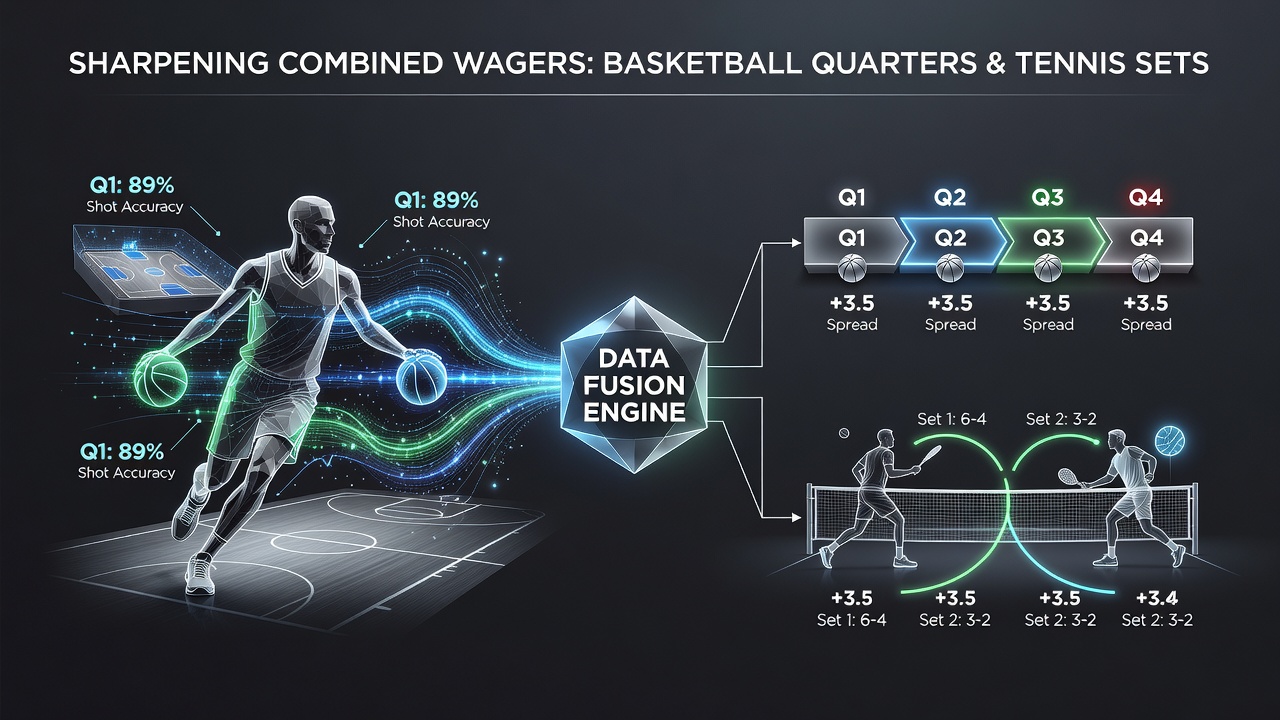
Data fusion methods now combine athlete biometrics such as heart rate variability and muscle oxygen levels with venue variables including court temperature, altitude, and surface friction to adjust predictions for basketball quarters and tennis sets in combined wagers, and researchers at institutions like the Australian Institute of Sport have documented these approaches in performance analysis reports since the mid-2020s.
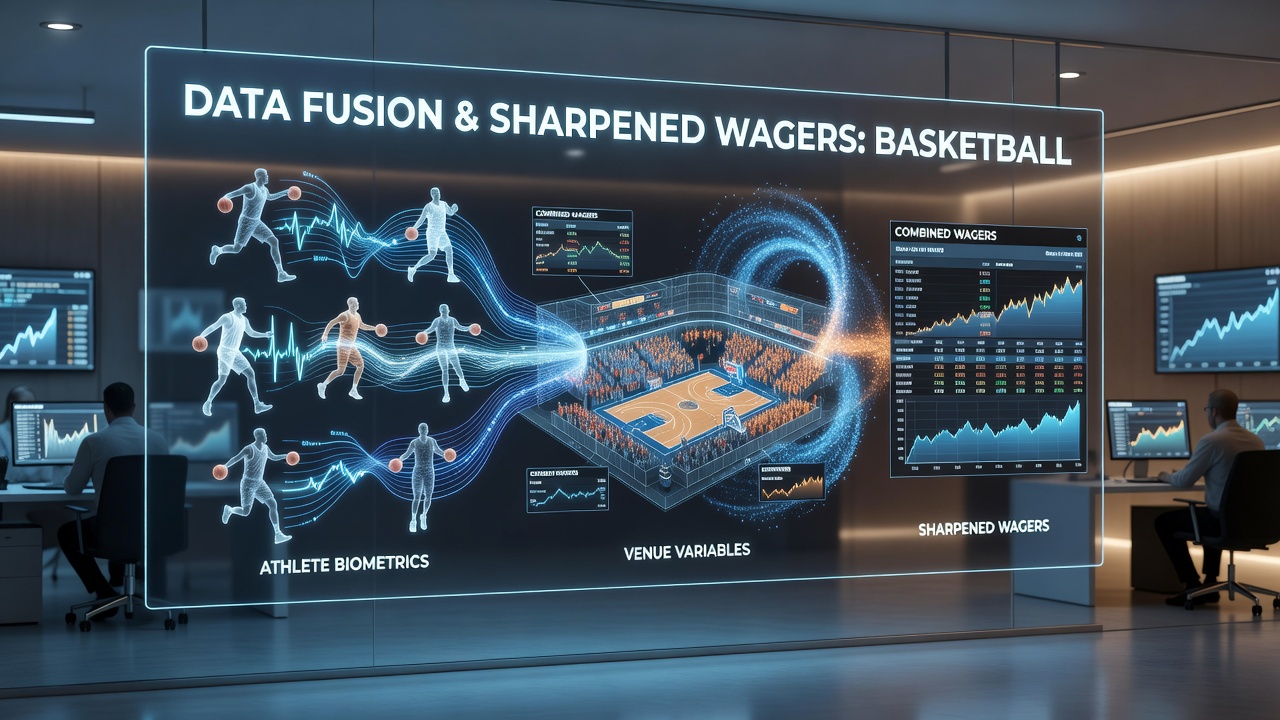
Teams collect real-time biometric streams through wearable devices while environmental sensors at venues capture humidity, lighting intensity, and crowd density, after which algorithms merge the datasets to generate adjusted probability models for specific segments of play rather than full-match outcomes.
Biometric Inputs and Their Role in Segment Analysis
Basketball players exhibit measurable shifts in acceleration patterns and recovery rates during individual quarters, and fusion systems cross-reference these signals against historical data from similar venue conditions to estimate fatigue thresholds that influence scoring margins in the third or fourth periods. Tennis competitors display changes in serve velocity and lateral movement efficiency across sets, which data platforms align with factors like court speed and air density to recalibrate expected break-point conversion rates.
Observers note that fusion models process these inputs through layered neural networks that weight biometric deviations more heavily when venue conditions deviate from seasonal norms, and one study from the University of Queensland's sports science department illustrated how elevated core temperatures at indoor arenas correlated with reduced second-quarter efficiency in multiple league samples.
Venue Variables and Environmental Calibration
Altitude affects oxygen uptake and sprint recovery in both sports, while temperature swings alter grip consistency on tennis courts and ball bounce on hardwood floors, and fusion frameworks incorporate live feeds from meteorological services alongside static venue profiles to normalize these effects within betting probability matrices. In June 2026 several professional events scheduled across high-altitude locations in North America and Europe provided additional datasets that analysts used to test seasonal adjustments in combined wager structures.
These systems also factor in dynamic elements such as arena acoustics that influence player communication during basketball timeouts and wind patterns that affect tennis ball trajectory on outdoor courts, after which the integrated outputs feed into models that separate first-set performance from later-set adjustments.
Application to Combined Wagers Across Segments
Combined wagers that span basketball quarters and tennis sets benefit when models isolate performance windows because biometric-venue fusion reveals patterns that whole-match statistics obscure, and industry reports from the European Gaming and Betting Association indicate rising adoption of segment-specific analytics among professional data providers. Operators integrate these refined estimates to structure multi-leg products where a basketball quarter outcome links with a tennis set result, and the fusion layer supplies the conditional probabilities that determine payout structures.
Take one research team that tracked collegiate basketball squads across varying humidity levels and found that elevated dew points correlated with lower three-point accuracy in opening quarters, while parallel tennis data showed serve fault rates climbing in second sets under similar moisture conditions, and fusion engines merged both streams to adjust parlay odds accordingly. Such examples demonstrate how the approach extends beyond single-sport analysis.
Technical Implementation and Data Sources
Platforms aggregate biometric readings from devices compliant with standards set by organizations like the International Society of Biomechanics in Sports, then synchronize them with venue telemetry collected through standardized IoT protocols, after which machine learning pipelines perform feature extraction and cross-validation before releasing updated projections. Government statistical agencies in Canada have published anonymized performance datasets that researchers combine with biometric collections to validate model accuracy across multiple seasons.
Processing occurs at intervals that align with quarter and set boundaries, allowing updates between segments, and this timing supports wager types that settle on partial results rather than final scores. Data quality depends on sensor calibration and sample size, with larger datasets from professional leagues providing more robust training material for the fusion algorithms.
Conclusion
Fusion of biometric and venue data continues to supply segment-level adjustments that operators apply to combined basketball and tennis wagers, while ongoing collection efforts through academic and industry partnerships expand the available training sets. As events unfold through June 2026 and beyond, the integration of additional sensor streams and refined algorithms maintains the capacity to isolate performance windows within quarters and sets for analytical purposes.